Are Rubies Valuable?
Rubies have been called the “king of gemstones” for centuries, and for good reason. Their deep red glow has symbolized love, passion, and power across cultures—from ancient warriors wearing them for protection to royals treasuring them as signs of wealth. But how valuable are rubies today? And how do you know if the one you’re eyeing is worth the price?
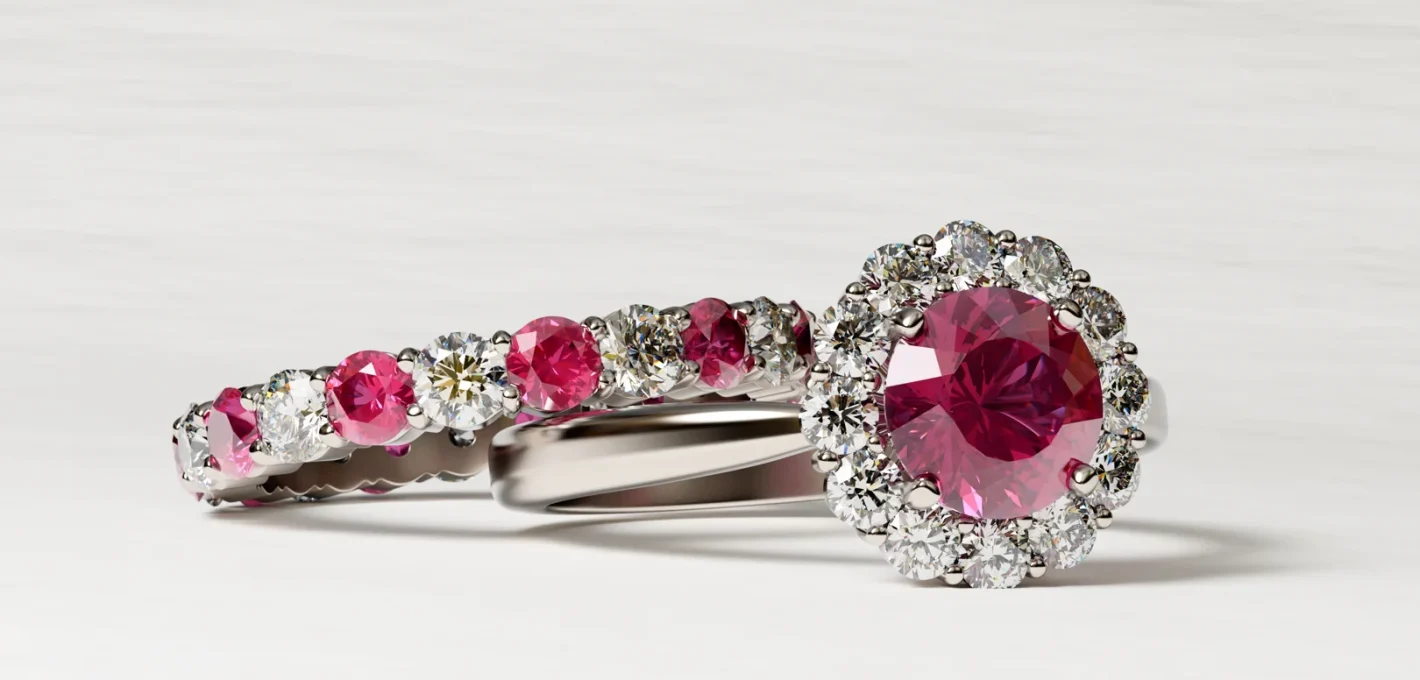
The value of a ruby is determined by several factors, including its place of origin; grading factors such as hue, tone, and saturation; treatments and their effects; whether it is a mined or lab-created ruby; and, of course, the carat size of the ruby.
In this guide, you’ll learn where rubies are found, how they’re graded, what makes them expensive (sometimes even more than diamonds), and how to choose the right one for your budget.
Where Are Rubies Found?
Ruby Origins and Their Impact on Value
Rubies form deep underground when aluminum and chromium meet under intense heat and pressure. Only a few places in the world create the right conditions, and where a ruby comes from can greatly affect its beauty and value.
The most prized rubies come from Myanmar (formerly Burma). These Burmese rubies are famous for their rich, pure red color—often called “pigeon’s blood.” Their intense hue, combined with natural fluorescence, gives them a glow that collectors love.

Other sources include:
- Thailand – Rubies from here tend to have a darker, more garnet-like red.
- Sri Lanka (Ceylon) – These often have pinkish or purplish undertones and are lighter in tone.
- Mozambique, Madagascar, and Tanzania (Africa) – African rubies vary in color and clarity, but high-quality ones can rival Burmese stones.
Origin matters because it often influences color, clarity, and treatment history. Burmese rubies command the highest prices, especially when untreated. Rubies from other regions may be just as beautiful, but their market value is usually lower.

Rubies aren’t just valuable because of where they’re found—they’ve also held deep meaning for centuries. In ancient India, they were called the “ratnaraj,” or “king of precious stones,” and were believed to bring protection and good fortune.
Medieval Europeans associated rubies with health and vitality, while in Burmese lore, warriors believed they became invincible when rubies were embedded in their skin.
Today, rubies remain a symbol of love and courage—and as the July birthstone, they’re a meaningful gift with both beauty and symbolism. Some also believe rubies carry metaphysical properties, like stimulating the heart and encouraging confidence and passion.
Are Rubies Valuable?
Understanding Ruby Value
Yes—rubies are among the most valuable gemstones in the world. But their worth depends on several factors.
1. How Rubies Are Graded
Like diamonds, rubies are evaluated by color, clarity, cut, and carat weight—but color carries the most weight. The most valuable rubies have a deep red hue, slight hints of blue, and strong saturation. Gemologists evaluate a ruby’s color using three qualities: hue, tone, and saturation.
- Hue is the ruby’s basic color. The most desirable rubies have a pure red hue or a red with just a touch of blue, often described as “pigeon’s blood.” Rubies with orange or purple undertones are usually less valuable.
- Tone describes how light or dark the ruby appears. The finest rubies fall in the medium to medium-dark range. If the tone is too light, the gem may be classified as pink sapphire instead. If it’s too dark, the ruby can look muddy or lifeless.
- Saturation refers to the intensity or purity of the color. A ruby with high saturation has a vivid, glowing red that seems to light up from within. Rubies with weak or brownish saturation are much less valuable—even if they’re large or clear.


When all three elements—hue, tone, and saturation—line up just right, the result is a truly exceptional ruby that commands a premium price.
Clarity also matters. While inclusions are common, fewer visible ones make the ruby more desirable. Still, minor silk-like inclusions can actually enhance a ruby’s glow.
2. Treatments and Their Effects
Many rubies are heat-treated to improve color or clarity. This is widely accepted in the industry and doesn’t automatically lower the stone’s value. But fracture-filled or lead-glass–filled rubies are a different story. In these stones, surface cracks are filled with a glass-like substance (sometimes containing lead) to improve clarity. The result may look striking at first, but these rubies are far more fragile and should be priced much lower. They’re also harder to clean and can be damaged by heat or chemicals. Sellers should always disclose this treatment—if they don’t, it’s a major red flag.
Lab-created rubies, made using heat and chemical processes in a lab, look almost identical to natural rubies. They’re real rubies in terms of composition but are far less expensive and not as rare. In many countries—like the United States and members of the European Union—sellers are required to clearly disclose when a ruby is synthetic or lab-grown. However, disclosure laws can vary by region, and in some international markets or online listings, lab-created rubies may not be clearly labeled. For this reason, it’s wise to buy from reputable sellers and ask for third-party gem certification when possible.
3. Price Ranges
Commercial-quality natural rubies: $200–$3,000 per carat.
Fine-quality rubies: $5,000–$20,000+ per carat, especially if untreated and from Myanmar.

4. Common “Ruby” Misnomers (But Not Real Rubies)
Some gemstones include the word “ruby” in their names but aren’t rubies at all:
- Balas ruby – Actually red spinel
- Bohemian ruby – Red garnet from the Czech Republic
- Siberian ruby – Red or purple spinel
- Cape ruby – Another name for red garnet
- Australian ruby – Also usually garnet
- American ruby – A trade name for pyrope garnet
Always ask for gem lab certification to confirm what you’re buying.
Fun Fact:
Rubies and sapphires actually come from the same mineral—corundum. The only difference is color.
When corundum is red, it’s called a ruby. Any other color—whether it’s blue, yellow, green, or pink—is considered a sapphire. That’s why the color grading of rubies is so strict: if a stone is too light, it may be classified as a pink sapphire instead, which affects both its identity and its value.
The distinction can be subtle, and even experts sometimes debate where ruby ends and pink sapphire begins. Most grading systems use hue, tone, and saturation to define the difference. A ruby must have red as its primary hue, with only slight hints of purple or orange allowed. It also needs a medium to medium-dark tone and moderate to vivid saturation to meet industry standards. Stones that don’t meet these benchmarks—especially if they lean too light—are classified as sapphires instead.
Either way, both stones are beautiful, durable, and perfect for everyday wear or special occasions.

Are Rubies More Expensive Than Diamonds?
Sometimes, yes. While diamonds are more common in engagement rings, fine rubies—especially untreated Burmese stones—can cost more per carat than high-quality diamonds.
Here’s a general breakdown:
- 1-carat diamond (G color, VS2 clarity): ~$5,000–$7,000
- 1-carat fine ruby (top color, untreated, Burma origin): $10,000–$15,000+
Why do rubies cost more in some cases?
- Rarity: Fine rubies, especially untreated ones, are extremely rare.
- Color demand: “Pigeon’s blood” red is highly sought-after.
- Market fluctuations: Political instability in Myanmar and limited mining can drive up prices.
However, most commercial rubies (especially treated or lower-grade stones) are more affordable than diamonds.
Lab-created rubies cost significantly less than both natural rubies and diamonds and offer a budget-friendly option for rich color without the price tag.
Famous Rubies in History
Rubies have long been prized by royalty and collectors, and a few famous stones have made headlines for their beauty—and their price tags.
- The Sunrise Ruby – Weighing 25.59 carats, this Burmese ruby set a world record in 2015 when it sold for over $30 million at auction. It remains one of the most expensive colored gemstones ever sold.
- The DeLong Star Ruby – A 100-carat cabochon ruby displayed at the American Museum of Natural History. It was famously stolen and later recovered in a dramatic case.
- The Rosser Reeves Ruby – A 138-carat Sri Lankan star ruby known for its strong asterism (a star-like effect), now housed at the Smithsonian Institution.

Practical Buying Guide: What to Know Before You Buy
If you’re considering buying a ruby, asking the right questions can protect you from overpaying—or worse, buying something that isn’t what it seems. A trustworthy jeweler will welcome your curiosity and offer clear, confident answers. Here are smart questions to ask and tips to stay on track:
- Is this ruby natural or lab-created?
This is one of the most important things to know. Lab-created rubies have the same chemical makeup but aren’t rare, so they cost less. Sellers should state this clearly.
- Has the ruby been treated?
Most rubies are heat-treated to improve color or clarity. That’s normal and widely accepted. But avoid stones that have been fracture-filled or dyed unless the price reflects that.
- Can you provide a certificate from a gemological lab?
Reputable sellers should be able to show certification from a lab like GIA, AGL, or IGI. These reports confirm whether the ruby is natural, where it’s from (if possible), and whether it was treated.
- What is the ruby’s origin?
Burmese rubies are often the most valuable. While origin can’t always be guaranteed, gem labs sometimes include it in their reports. Origin affects value, so it’s worth asking.
- What return or exchange policy do you offer?
If a seller seems hesitant to offer a return policy or any form of guarantee, that’s a red flag—especially for a high-ticket purchase like a ruby.
Bonus tip: Avoid sellers who use vague terms like “genuine ruby” without explaining whether it’s natural or lab-created. Also be cautious if a price seems unusually low for the color or size—if it feels too good to be true, it probably is.
Red Flags to Watch For:
- Vague answers about origin or treatments
- Prices that seem too good to be true
- No documentation or unclear sales terms

Best Cuts for Different Budgets:
- Round and oval cuts offer timeless style and good sparkle.
- Cushion and pear cuts can make the ruby appear larger.
- Cabochon (smooth, domed) rubies are often used in vintage styles and can be more affordable.
Choosing the Right Ruby for Your Budget:
If you’re working with a modest budget, consider a lab-created ruby or a natural stone that’s been heat-treated. They offer rich color at a more accessible price.
For mid-range options, look for rubies with good color and minor inclusions—these can offer great visual appeal without the premium price of top-tier stones. If you’re investing at a higher level, focus on origin (like Burmese rubies), lack of treatment, and strong certification.
Setting style and cut can also stretch your budget—an oval ruby in a bezel setting may look larger and cost less than a round ruby of the same carat weight in a halo setting.
Historical Figures & Celebrities Known for Rubies
- Elizabeth Taylor – Her Burmese ruby and diamond necklace from Cartier (a gift from Mike Todd in 1957) is one of the most famous ruby pieces in Hollywood history. It sold at auction for over $3.7 million in 2011.
- Queen Elizabeth II – Her royal collection includes the Burmese Ruby Tiara, made with rubies gifted from the people of Burma as a wedding present. The tiara was commissioned by the Queen in 1973 and includes 96 rubies.
- Grace Kelly (Princess of Monaco) – Owned a Van Cleef & Arpels ruby and diamond set gifted to her by Prince Rainier, which included a necklace, earrings, and bracelet.
- Angelina Jolie – Wore a bold red ruby necklace designed by Lorraine Schwartz to the Oscars, which helped spark renewed interest in colored gemstones on red carpets.
- Jessica Simpson – Received a ruby engagement ring from Nick Lachey, one of the earlier celebrity examples of using colored gemstones in modern bridal jewelry.
Caring for Ruby Jewelry
Rubies rank 9 on the Mohs hardness scale, just below diamonds, which makes them excellent for everyday wear. But like any fine gemstone, they still need care.
To keep your ruby looking its best:
- Clean it with warm, soapy water and a soft brush.
- Avoid harsh chemicals or ultrasonic cleaners (especially with treated rubies).
- Store it separately in a soft pouch or fabric-lined box to avoid scratches.
Note: Cleaning instructions may vary depending on the metal setting or the presence of other gemstones. It’s always best to consult a professional jeweler.

Professional cleanings once or twice a year can help maintain its brilliance and allow a jeweler to check for loose settings.
Not all rubies require the same care. Untreated and heat-treated rubies are durable enough for daily wear and can be safely cleaned with warm, soapy water. However, rubies that have been fracture-filled or lead-glass–filled are more delicate. The fillers can be damaged by ultrasonic cleaners, steam, or even certain chemicals, so these stones should only be cleaned gently by hand and never exposed to high heat. If you’re unsure about the treatment history of your ruby, ask a professional before cleaning.
By caring for your ruby well, you protect both its beauty and long-term value.
Bonus Reading: The Ultimate Guide to Gemstone Jewelry Care
Final Thoughts: Are Rubies Worth It?
Rubies are not only beautiful—they’re meaningful, durable, and often rare. From rich history to striking color, they offer something special for collectors and casual buyers alike.
Whether you’re choosing a natural ruby for its heritage or a lab-created stone for its beauty and affordability, knowing how to assess value will help you make a confident purchase.
Looking for expert advice or a custom ruby piece? Reach out to our team for a consultation or browse our ruby collection today.

Send Us a Message:
Send us a message about loose rubies, ruby jewelry, or anything jewelry related.
What Our Clients Say About Us:
EXCELLENTTrustindex verifies that the original source of the review is Google. Jewelry by Design provides excellent cusromer service. Eno is professional, courteous and provides quality service you can trust.Posted on GoogleTrustindex verifies that the original source of the review is Google. The experience was great thanks to Norrin. He was exceptional. We were about to walk out because one of the front desk employees told us no, but he came after us, took the time to help, and made everything work out. He went above and beyond, and we truly appreciate his assistance. He is the best!Posted on GoogleTrustindex verifies that the original source of the review is Google. I had a really simple request and the people at this store were kind, affordable and they did a great job!!Posted on GoogleTrustindex verifies that the original source of the review is Google. Service was professional and courteous. Representative was patient and knowledgeable.Posted on GoogleTrustindex verifies that the original source of the review is Google. The associate was very friendly and helpfulPosted on GoogleTrustindex verifies that the original source of the review is Google. Great job sizing and cleaning the ring. Treated very professionally thanksPosted on GoogleTrustindex verifies that the original source of the review is Google. I purchased a few items and the customer service was exceptional. The prices were great and Mo the manager personally made sure that I was taken care of and a happy customer. I appreciate the great service.Posted on GoogleTrustindex verifies that the original source of the review is Google. It was definitely a pleasure working with Myah. I really hesitated to do this for someone else much less her 60th Wedding Anniversary. You know different taste or dissatisfaction about something, but thanks to Myah, everything worked out perfectly. And I know my sister so well. There was a great selection of bands with quality diamonds. Myah was so helpful in allowing me to take pictures for her. She and her husband live in Walterboro, SC. So it was very important for her to see the selection and make a decision. She is thrilled with the selection and looks forward to wearing it. It truly is a stunning ring! She has been wanting this type of ring for sometime so she decided their 60th was the appropriate time as it is known as the Diamond Anniversary. Myah, thank you so much for your help and patience. You are a Gem!!!Posted on GoogleTrustindex verifies that the original source of the review is Google. Had a chain switched on my necklace. They did a fantastic job and the staff are informative professional and polite especially Eno who worked with me.Verified by TrustindexTrustindex verified badge is the Universal Symbol of Trust. Only the greatest companies can get the verified badge who has a review score above 4.5, based on customer reviews over the past 12 months. Read more
Family-Owned. Expert-Led. Customer-Focused.
Decades of Care, Generations of Trust
- Nearly 200 years of family experience in the jewelry industry
- 5-star rating from 500+ verified Google reviews
- In-house bench jewelers for expert repairs, custom design, and inspections
- Credentialed experts with advanced training from GIA, AGS, and other leading institutions
- JA member store with a commitment to the highest ethical and professional standards