Engagement Ring vs. Wedding Ring: What’s the Difference?
Shopping for bridal jewelry can be surprisingly confusing—especially when terms like engagement ring and wedding ring are used interchangeably. While these rings serve different symbolic purposes, you’ll often see “wedding ring” used as a blanket term for any ring related to marriage. So, what’s the actual difference between an engagement ring and a wedding ring? The short answer is that engagement rings are typically given during a proposal while wedding rings are typically given at the marriage ceremony. Let’s break it down in detail to help you shop with confidence.
What Is an Engagement Ring?
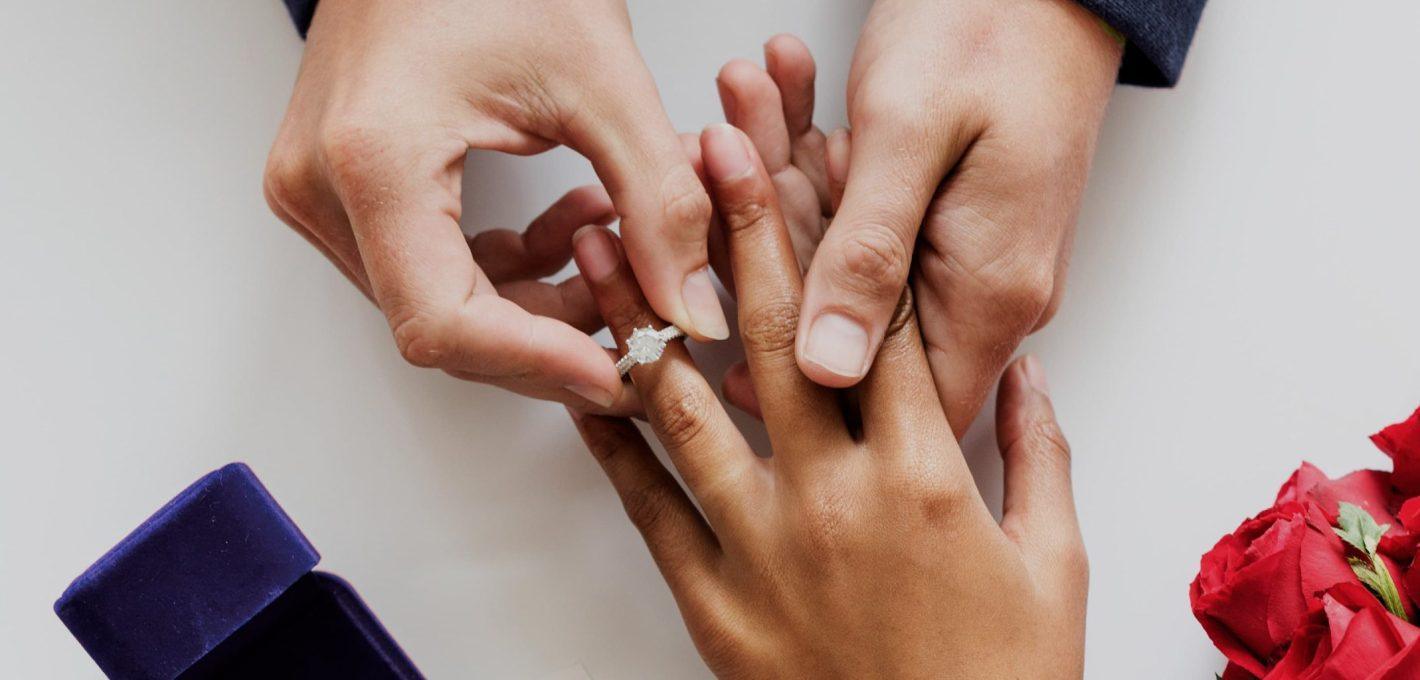
An engagement ring is traditionally given during a proposal as a symbol of commitment and the promise of marriage. It’s often the first ring purchased in a couple’s wedding journey and is typically designed to stand out. Most engagement rings feature a prominent center stone—most commonly a diamond—mounted on a precious metal band. Styles range from classic solitaires to more elaborate halo or three-stone settings.
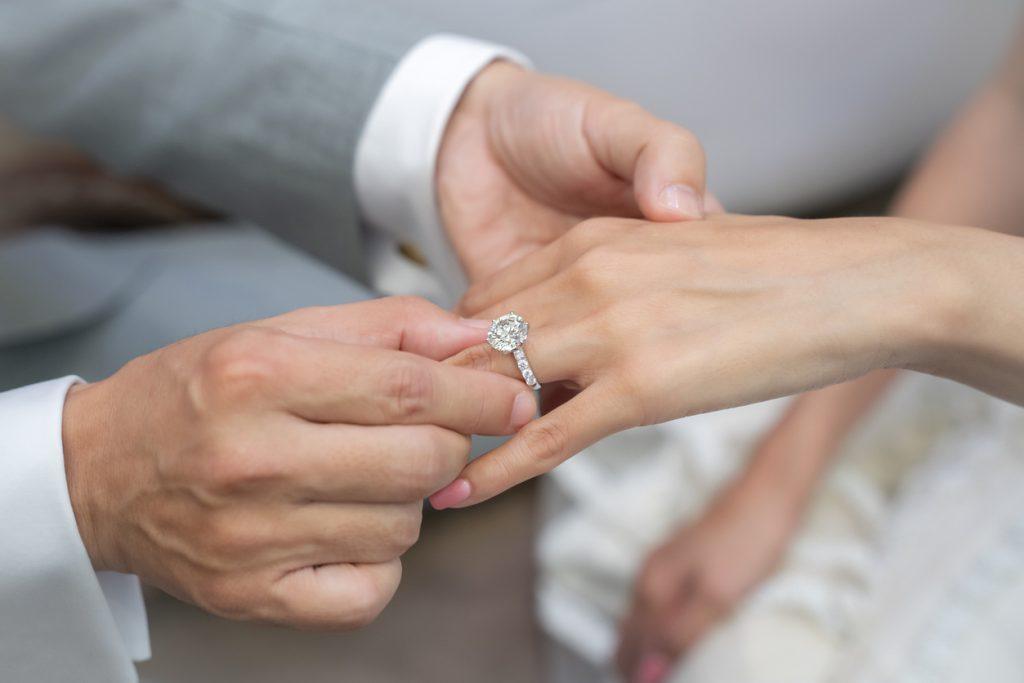
Modern engagement rings can also reflect personal taste and values. Some couples choose colored gemstones like sapphires or emeralds, while others prioritize lab-grown diamonds or vintage designs. The key feature is always symbolic: the engagement ring marks the moment when two people agree to build a life together.
Traditionally, the engagement ring is worn on the fourth finger of the left hand—the “ring finger”—based on the old belief that a vein in this finger led directly to the heart.
Bonus Reading: Engagement Ring Glossary
What Is a Wedding Ring?
A wedding ring, also known as a wedding band, is exchanged by both partners during the wedding ceremony. This ring represents the formal and legal joining of two lives in marriage. Wedding bands are typically more understated in design than engagement rings. They often feature a simple, unadorned metal band, although many include small diamonds, milgrain edges, or other subtle design details.
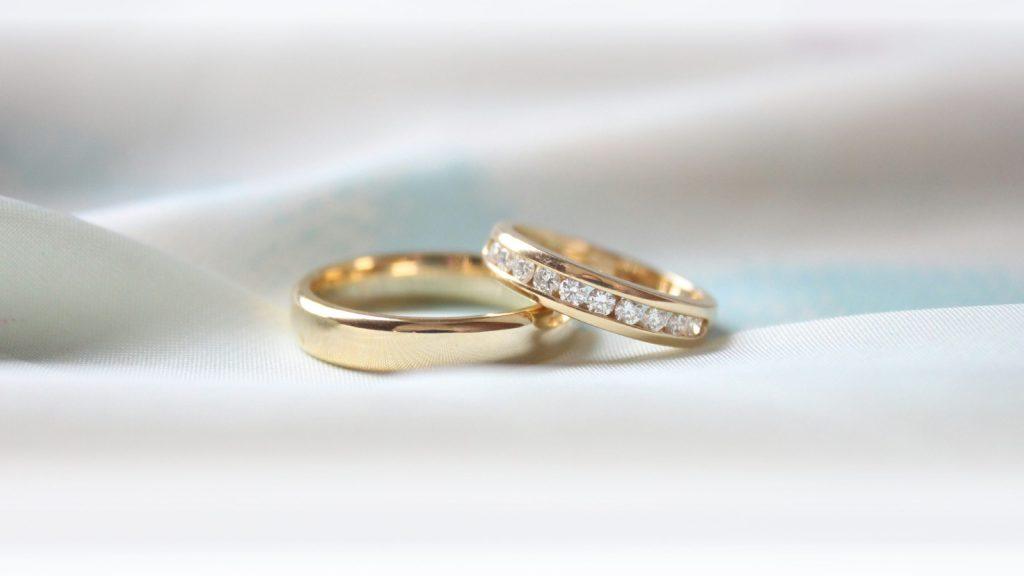
Some couples choose matching wedding bands to emphasize unity, while others opt for styles that complement—but don’t necessarily match—their partner’s ring. Common metals include yellow gold, white gold, platinum, and more recently, alternative materials like tungsten or titanium.
After the ceremony, wedding rings are typically worn alongside engagement rings on the same finger, though this varies by culture and preference.
Why the Terms Get Confused (Even by Jewelers)
The difference between engagement rings and wedding rings is clear in tradition—but less so in marketing. Many jewelers and retailers refer to engagement rings as “wedding rings,” especially when using broad categories like bridal jewelry or wedding ring sets. In fact, the term “wedding ring” is sometimes used as an umbrella phrase to refer to all rings associated with marriage, which can create confusion for buyers.
This overlap in terminology is especially common online, where search terms are optimized for traffic. For example, someone shopping for a diamond engagement ring might still find it listed under “wedding rings” on a retailer’s website.
Understanding this common usage helps you navigate listings more effectively. When in doubt, focus on the timing and purpose of the ring: if it’s given during the proposal, it’s an engagement ring; if it’s exchanged during the ceremony, it’s a wedding ring.
Key Differences Between Engagement and Wedding Rings
These distinctions are helpful when you’re shopping, creating a custom design, or deciding how many rings you actually want.

Cultural Variations in Ring Traditions

The customs described in this blog reflect Western traditions, particularly those in North America and parts of Europe. In many of these cultures, the engagement ring is given at the time of proposal, followed by an exchange of wedding rings during the ceremony.
However, ring customs vary significantly around the world. In some cultures, only one ring is exchanged. In others, rings are worn on different hands or not used at all. Some couples choose to honor their cultural heritage by following alternative engagement or wedding rituals. While this guide focuses on Western practices, the most important thing is to choose traditions that are meaningful to you.
Do You Need Both an Engagement Ring and a Wedding Ring?
The answer depends on your preferences, values, and lifestyle. Traditionally, couples purchase both an engagement ring and a wedding ring. But that’s not a requirement—plenty of couples today choose alternatives that feel more personal or practical.
Some prefer to invest in a single, high-quality ring that serves both purposes. Others opt for a minimalist approach and skip the engagement ring altogether. In recent years, it’s also become common to purchase an engagement ring and wedding ring set designed to fit together both visually and physically, making stacking more seamless.
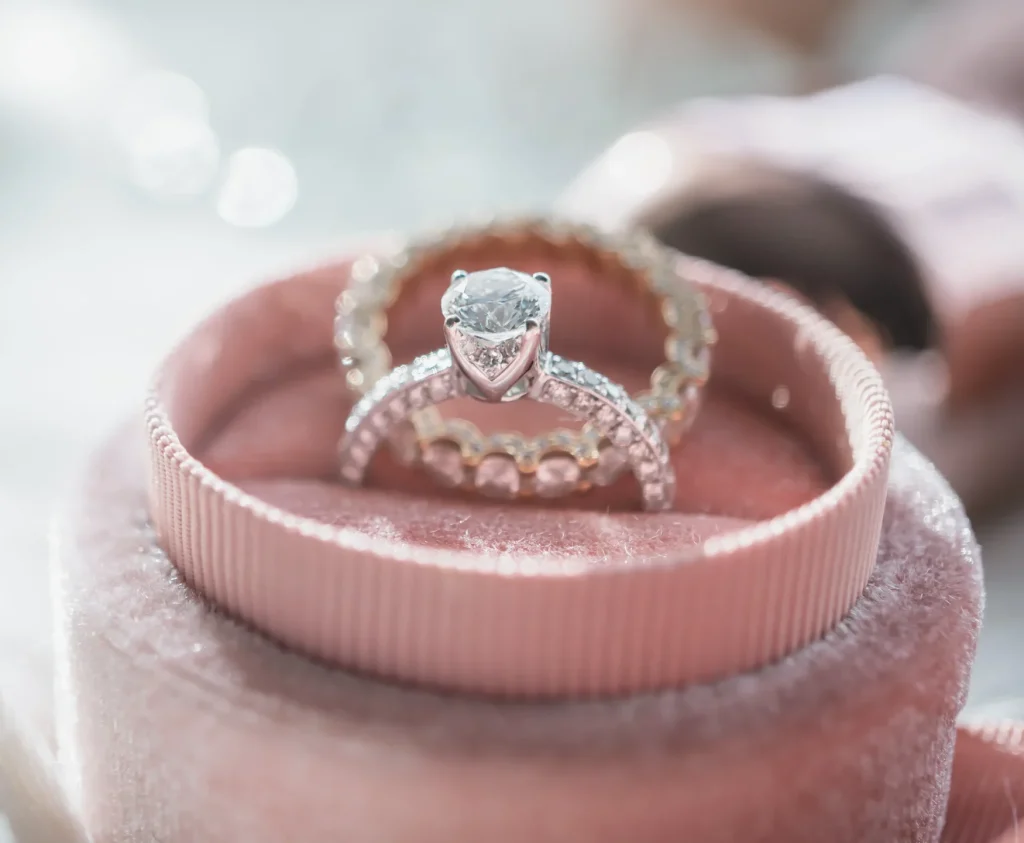
Budget is often a factor too. Some couples choose to splurge on the engagement ring and keep the wedding bands simple. Others split their budget evenly or prioritize bands that reflect shared symbolism. The right answer is the one that feels meaningful to you.
How to Wear Engagement and Wedding Rings Together
Traditionally, during the wedding ceremony, the engagement ring is moved to the right hand so the wedding band can be placed first on the left ring finger—closest to the heart. After the ceremony, many people move the engagement ring back to its original place, stacking it on top of the wedding band.
That said, traditions are evolving. Some people choose to wear their rings on separate hands or fingers. Others wear only one ring daily and save the second for special occasions. Still others combine both into a single ring designed for long-term wear.
Some couples opt for soldering their engagement ring and wedding band together after the wedding. This permanently fuses the two into one ring, which can improve comfort and prevent the rings from twisting or separating during daily wear. It’s a popular choice for those who wear their rings all the time and want them to function as a single piece.
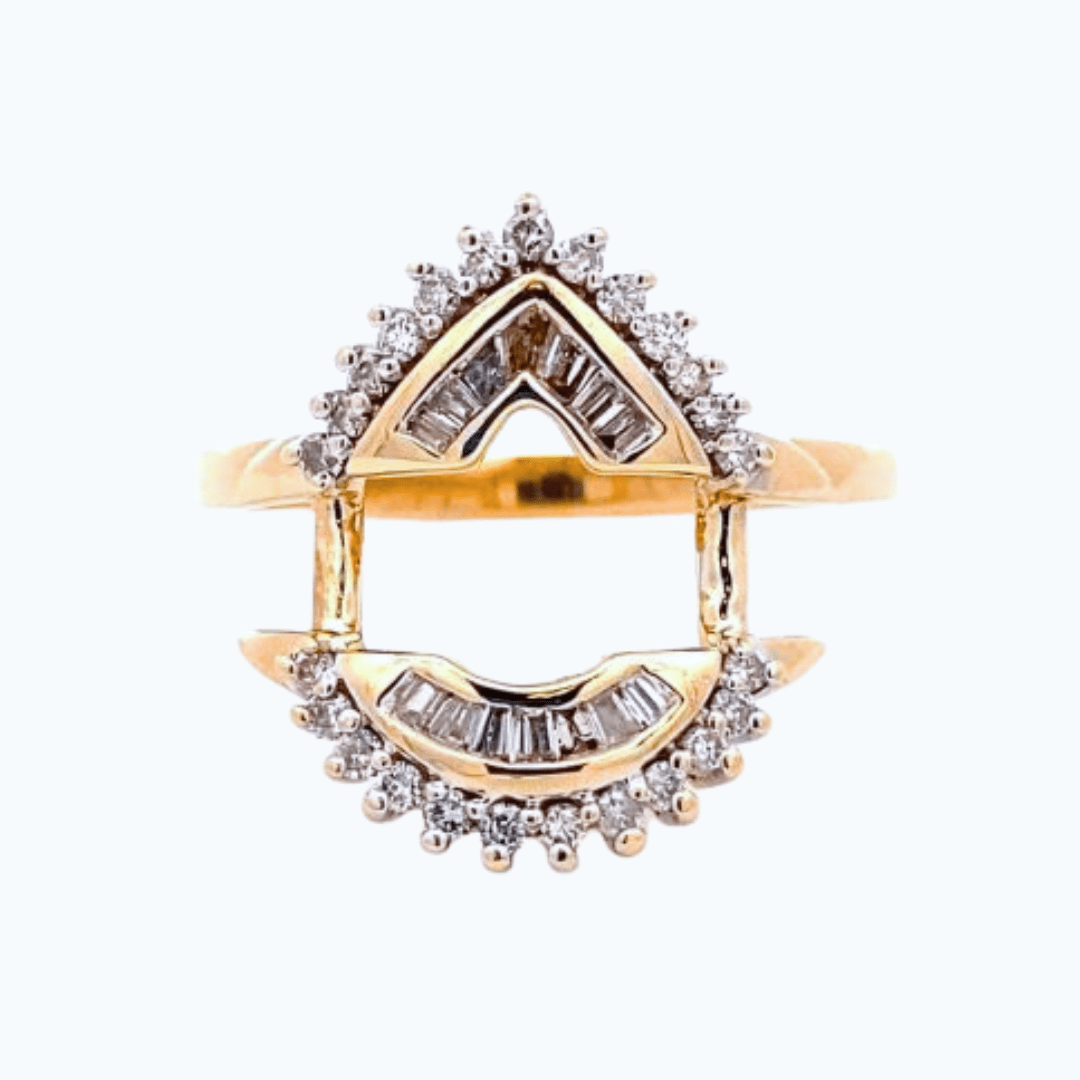
For those who prefer flexibility, ring guards (or ring enhancers) offer a less permanent option. These specially designed bands surround the engagement ring from both sides, creating a cohesive look and helping keep the set aligned. They’re especially useful for high-profile engagement rings or unusual shapes that don’t sit flush with a traditional band.
Ultimately, how you wear your engagement and wedding rings is a personal decision. Whether you stack, separate, solder, or skip one entirely, the most important thing is choosing what works for your lifestyle and feels meaningful to you.
Final Thoughts
While engagement ring vs. wedding ring might seem like a small distinction, understanding the difference can help make your shopping process smoother and more meaningful. From the purpose and design to how they’re worn, each ring plays a unique role in the story of your relationship.
Whether you follow tradition or create your own, the most important thing is choosing rings that reflect your values, your love story, and your life together. And now that you know the difference between an engagement ring and a wedding ring, you’re ready to choose with confidence.